
 Road managers
 Accessibility tools


Australian Capital Territory Higher Mass Limits Declaration Operator's Guide
Australian Capital Territory Higher Mass Limits Declaration Operator's Guide
National
Heavy
Vehicle
Regulator
The Australian Capital Territory Higher Mass Limits Declaration 2026 (No.1) authorises eligible heavy vehicles to operate on Higher Mass Limits (HML) on stated areas and routes in the Australian Capital Territory.
This Declaration supports HML access in the Australian Capital Territory. This instrument does NOT exempt these heavy vehicles from other requirements of the Heavy Vehicle National Law (HVNL), including, but not limited to, other mass and dimension requirements.
| Specifications | |
|---|---|
| Gazette notice: | C2026G00303 |
| Starts: | 10 August 2026 |
| Expires: | 9 August 2031 |
| Vehicle types: | Class 2, bus, rigid truck, prime mover and semitrailer, B-double, HML approved PBS vehicles |
| Exemptions: | Higher Mass Limits (HML) |
| Law: | HVNL, MDL |
| Coverage: | ACT |
| To be carried: | No |
- Overview
- Definitions
- Eligible
Vehicles - Conditions
- Network and
Mapping - Related
Notices - Resources
- Changes and
Updates
Overview
The information in this Operator’s Guide is intended to do two things:
- Explain how the Australian Capital Territory Higher Mass Limits Declaration 2026 (No.1) (the Declaration) operates, to assist in complying with it. It is important to remember this Operator’s Guide is instructional only and it is the Declaration that provides the exemption. If there is a difference or misunderstanding between the Operator’s Guide and the Declaration, the Declaration has priority and must be followed. The only exceptions are the requirements or conditions set out in the ‘Network and Mapping’ section explained below.
- Provide additional information referred to in the network requirements of the Declaration. This includes links to network maps and other information such as vehicle, travel and road conditions. Networks and their conditions published in the ‘Network and Mapping’ section of this Operator’s Guide are not general advice and must be treated as conditions of the Declaration.
Please read the Declaration and this Operator's Guide together. To download or print this guide, use the print or PDF buttons on the top right of this page.
About the Declaration
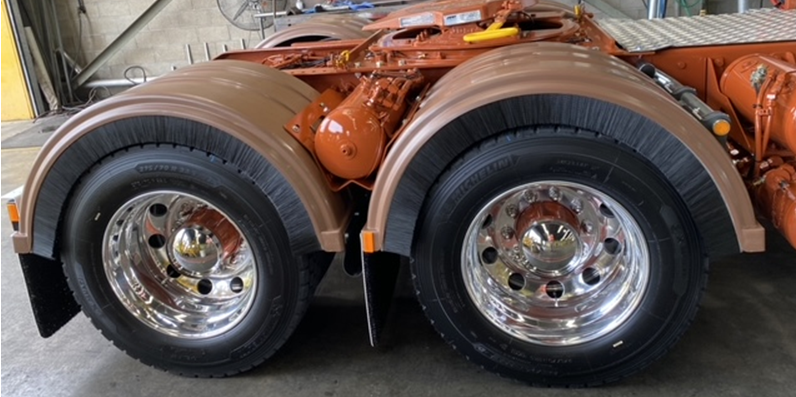
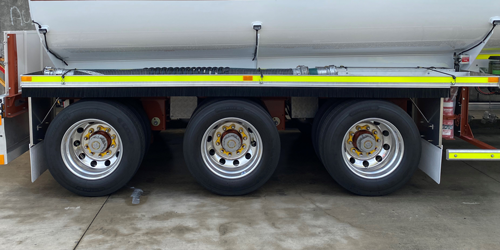
Higher Mass Limits (HML) is a mass exception allowing an increased mass limit to the following single axle and axle groups fitted with road-friendly suspension on eligible vehicles in the Declaration.
| Axle Groups | Description | Condition |
|---|---|---|
 | Single drive axles on buses | Fitted with certified road-friendly suspension |
 | 6-tyred tandem axle groups | Fitted with certified road-friendly suspension |
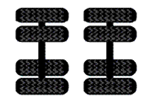 | 8-tyred tandem axle group | Fitted with certified road-friendly suspension |
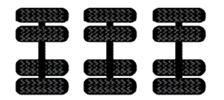 | Tri-axle group | Fitted with certified road-friendly suspension |
 | Quad axle group | Fitted with certified road-friendly suspension |
Refer to the Conditions tab for applicable mass limits
Note: The tri-axle drive group (drive axle group with more than two axles) is ineligible under this Declaration. Operators will need to apply for a permit for all vehicle types with a tri-axle drive group, including rigid and articulated configurations.
Exemptions
These exemptions only apply to the extent to which conditions are granted.
Application
The Declaration applies to an HML heavy vehicle that complies with the requirements of Schedule 5 of the Heavy Vehicle (Mass, Dimension and Loading) National Regulation (MDL).
The Declaration does not apply to an HML heavy vehicle that is:
- a road train; or
- a PBS vehicle that is not approved to operate at higher mass limits under its PBS vehicle approval; or
- a B-double with a prime mover that has a tri-axle group as its drive axle group.
A vehicle to which this section applies is an eligible HML vehicle.
Definitions
The following are terms used in the Declaration or conditions of operation. Unless otherwise stated, words and expressions used in this Notice have the same meaning as defined in the HVNL.
| Term | Definitions |
|---|---|
| Dog trailer | A typical dog trailer has an axle or axle group at the front that is steered by connection to a towing vehicle by a drawbar and an axle or axle group at the rear of its load carrying surface. |
| General Mass Limits (GML) | The heavy vehicle general axle mass limits prescribed in the HVNL that apply to public roads in Australia, unless otherwise limited by load restriction signs. |
| Higher mass limits (HML) | A mass exception under the HVNL that allows Higher Mass Limits on approved routes for particular vehicles or vehicle combinations dependent on other conditions being met (e.g. IAP and/or road-friendly suspension may need to be fitted to the vehicle). |
| Pig trailer | A trailer that has:
|
| Rigid truck | A rigid motor vehicle built mainly as a load carrying vehicle. |
| Road friendly suspension system (RFS) | A suspension system certified as a road-friendly suspension system by the Vehicle Safety Standards Branch of the Commonwealth Department Infrastructure and Regional Development in accordance with VSB 11. |
| Semitrailer | A trailer that has:
|
| Tag Trailer | A typical tag trailer is a type of semitrailer that has a single axle or axle group towards the rear of its load carrying surface and is connected to the towing vehicle by a rigid drawbar. |
| Tandem axle group | An axle group of at least 2 axles, in which the horizontal distance between the centre-lines of the outermost axles is at least 1m but not more than 2m. |
| Tri-axle drive group | A tri-axle on the rear of the prime mover or rigid truck drive axle, where the tri-axle drive group is fitted with more than 2 axles with equal or non-equal torque share. |
| Tri-axle group | A group of at least 3 axles, in which the horizontal distance between the centre-lines of the outermost axles is more than 2m but not more than 3.2m. |
Eligible vehicles
Vehicles and combinations eligible to operate at HML in the Australian Capital Territory are shown in Table 1.
| Heavy vehicle and combinations | Vehicle image |
|---|---|
| Bus | 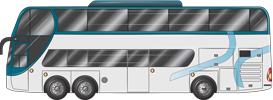 |
| Rigid truck | 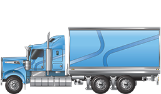 |
| Prime mover and semitrailer | 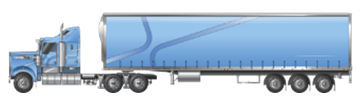 |
| B-doubles up to 26m |  |
| PBS vehicles approved for Higher Mass Limits |
Excluded vehicles
The following vehicle types are not eligible to operate at HML in the Australian Capital Territory:
- road trains (Type 1 and Type 2)
- Class 1 heavy vehicles
- rigid trucks towing a dog, pig or tag trailer
- vehicles fitted with a drive axle group with more than 2 axles, otherwise known as a tri-axle drive group.
Conditions
Declarations are subject to various conditions to ensure public safety, protect assets and prevent adverse impacts on the community, such as noise, emissions and traffic congestion. See the sections below for specific conditions related to the Declaration.
Mass conditions - click to expand
HML axle mass limits
To be eligible to operate at HML, the axle group must be eligible for the GML shown in Table 3.
The GML may then be increased to the HML shown in Table 3.
| Axles | Axle group/tyres | Mass limit (t) GML | Mass limit (t) HML |
|---|---|---|---|
| Single drive axles on buses | 9.0t | 10.0t |
| Six tyred tandem axle groups | 13.0t | 14.0t |
| Eight tyred tandem axle group- Dual tyres | 16.5t | 17.0t |
| Tri-axle group Dual tyres | 20.0t | 22.5t |
| Quad axle group dual tyres | 20.0t | 22.5t |
| The Declaration does not provide access for Tri-axle drive axle groups (drive axle groups with more than two axles) | |||
Certified Road Friendly Suspension (RFS)
Single axles or axle groups loaded at the HML must be fitted with certified road-friendly suspension systems. RFS reduces the impact of laden axles on road pavements and most bridge structures.
Any axle or axle group not loaded to mass limits greater than GML, do not need to be fitted with a road-friendly suspension system.
A single axle or axle group must qualify for the stated GML and be fitted with the certified road-friendly suspension before increasing to the stated HML in Table 3.
For additional information refer to Vehicle Standards Bulletin (VSB) 11 - Certification of Road-friendly Suspensions.
Alternative Compliance Accreditation (ACA) - Mass or Mass Management Accreditation
An eligible vehicle fitted with a tri-axle group or a quad-axle group (other than a drive group), operating at HML (on those axles) must be accredited under either Alternative Compliance Accreditation (ACA) - Mass or NHVAS Mass Management Module (granted prior to 1 August 2026).
Dimension conditions - click to expand
An eligible vehicle includes a vehicle designed to carry vehicles or livestock up to 4.6m in height.
There are no dimensional exemptions provided by this Declaration. All eligible vehicles must comply with general dimensions applying to the vehicle or combination.
For more information on general dimension, refer to the General mass and dimension limits.
Other conditions and additional information
Assessing routes
Before an eligible vehicle is driven along any route, its driver and operator must be satisfied that the route has been assessed and that the vehicle can be driven along it without:
- disrupting telecommunication, electricity, rail, gas, water or sewage services; or
- damaging a road (including a bridge), structure, rail crossing or tree.
Third party approvals
A third party is an entity with which consultation is required by either State or Commonwealth law, as a condition of operation or access.
Operators must secure all approvals from third parties such as electricity/utility companies, rail authorities and other third parties as part of their heavy vehicle operations.
For more information, visit the Third party approvals page.
Complying with the HVNL
Unless otherwise exempted by the Notice or this Operator's Guide, operators must ensure their vehicle or combination complies with the:
- Australian Design Rules (ADRs); and,
- Heavy Vehicle National Law (HVNL); and,
- Heavy Vehicle (Mass, Dimension and Loading) National Regulation (MDL); and,
- Heavy Vehicle (Vehicle Standards) National Regulation (VS Regulation).
Failure to comply may result in the driver and/or operator being liable for an offence. Penalties can include infringement notices or prosecution.
Loading requirements
To meet the loading requirements, the heavy vehicle must be loaded:
- in a way that load placement does not make the heavy vehicle unsafe or unstable
- in a way that the load is not likely to fall or be dislodged from the vehicle
- using an appropriate system to restrain the load.
Visit the NHVR loading page for more information on load requirements.
Chain of Responsibility (CoR)
Under the HVNL, every party in the Chain of Responsibility (CoR) has a positive duty to ensure the safety of their activities in relation to a heavy vehicle. This duty, known as the “primary duty”, applies to the scheduling, loading and consigning of a vehicle, as well as to its operation on a road.
Safety is broader than the safety of drivers and other road users. It also includes protection of road infrastructure, preventing damage to other vehicles or property, and minimising environmental harm. Substantial penalties may be imposed upon parties who breach this obligation and upon their executives.
For more information on your CoR obligations visit Chain of Responsibility on the NHVR website.
Our Regulatory Advice offers guidance, tips and tools for managing a range of heavy vehicle safety risks.
The requirement to carry the Notice
Drivers do not need to carry a copy of the Notice.
Network and mapping
For the purposes of s142 of the HVNL, an area or route specified in the 'Network & Mapping' section of this Operator's Guide is a stated area or route to which this Declaration applies. In addition to complying with the conditions stated in this Operator's Guide, operators must ensure compliance with the specific road manager access requirements set out below or in network maps.
National Network Map
The Declaration may refer to state or territory government websites for the publication of networks. Certain authorised heavy vehicle road network maps for the Australian Capital Territory, New South Wales, Queensland, South Australia, and Victoria are published by the National Heavy Vehicle Regulator, through the NHVR National Network Map. Additional information and guidance can be found on the National Network Map webpage.
Approved routes covered by the Declaration
An eligible vehicle may operate on the following network:
An eligible HML B-double may only operate roads shared across the Australian Capital Territory HML Network and the:
The approved networks are located on the National Network Map
Traffic advisory services - Click to expand
Prior to commencing any journey, operators should review traffic alerts, road closures, travel delays, and other traffic advisory information for participating jurisdictions.
Table 3 provides details and links to official traffic advisory services for each participating jurisdiction. For more information about a particular service, contact the relevant jurisdiction or department via the contact details listed on the service webpage.
| Jurisdiction | Website | Purpose |
|---|---|---|
| Australian Capital Territory | Road closures | View current and upcoming road closures across the Australian Capital Territory. |
Applying for a permit - Click to expand
Access permit applications are required for heavy vehicles that don’t comply with the conditions set out in a notice/declaration and when accessing routes that aren’t covered on an approved network.
The following pages provide useful information and resources for submitting access permit applications:
- Do I need a permit?: Information and resources for determining whether a road access permit, or a Notice is required to operate on Australian roads.
- Access permit application process: Information, resources, and instructions for submitting a valid access permit application.
Related notices or declarations
In this tab, you will find a list of national, state and territory notices/declarations related to the Australian Capital Territory Higher Mass Limits Declaration 2026 (No.1).
A related notice/declaration may coincide with the featured notice or provide alternative solutions for operators to operate under.
Related national notices
| Jurisdiction | Notice |
|---|---|
| National | National Class 2 B-double Authorisation Notice 2026 (No.1) Authorises access for Class 2 heavy vehicles that are B-doubles. National Class 2 Road Train Authorisation Notice 2026 (No.2) Provides complying road trains access in New South Wales, Queensland, South Australia and Victoria. The national notice introduces simplified and more nationally consistent conditions for road trains, supporting more seamless cross-border access. |

Related state and territory notices
| Jurisdiction | Notice |
|---|---|
| New South Wales | New South Wales Higher Mass Limits Declaration 2025 (No.1) Authorises the use of certain categories of heavy vehicles under higher mass limits on stated areas and routes and states the intelligent access conditions under which these heavy vehicles may be used. Please note the following supporting document for this Notice: |
| Queensland | Queensland Higher Mass Limits Declaration 2024 (No.1) Authorises heavy vehicles eligible to use Higher Mass Limits (HML) on stated areas and routes, during stated hours of stated days and to state the conditions under which they may be used. |
| South Australia | South Australian Class 3 Road Friendly Suspension Mass Exemption Notice 2026 (No.2) Exempts certain heavy vehicles and combinations fitted with certified Road Friendly Suspension from mass requirements set out in the Heavy Vehicle (Mass Dimension and Loading) National Regulation, allowing operation at masses that are equivalent to Higher Mass Limits under the Heavy Vehicle National Law (HVNL). This Notice replaces the South Australia Class 3 (Application of Higher Mass Limits) Mass Exemption Notice. |
| Tasmania | Tasmania Higher Mass Limits Declaration 2021 (No.1) Authorises the use of certain categories of heavy vehicles under higher mass limits on stated areas and routes in Tasmania. |
| Victoria | Victoria Class 3 Road Friendly Suspension Mass Exemption Notice 2026 (No.1) Exempts certain heavy vehicles fitted with certified road friendly suspension from mass requirements set out in the Heavy Vehicle (Mass Dimension and Loading) National Regulation. |

Resources
- Higher Mass Limits - Overview of Higher Mass Limits.
- Higher Mass Limits permit - Applying for a Higher Mass Limits permit.
Resources
All information about the Declaration is contained in this Operator’s Guide. Please refer to the tabs for more information about this Declaration, or contact us with your specific questions.
Note: If you have any feedback on the information provided please contact us at info@nhvr.gov.au
Participating jurisdiction heavy vehicle resources
For more information about operating a heavy vehicle in the participating jurisdiction, refer to the following site:
- Australian Capital Territory: Transport Canberra and City Services - Heavy vehicle conditions and network
Changes and updates
| Date | Summary | Links to communications |
|---|---|---|
| 10 August 2026 | The Australian Capital Territory Higher Mass Limits Declaration 2026 (No.1) commenced | C2026G00303 |
| 10 August 2021 | Industry newsletter - Higher Mass Limits permitted in the ACT | On the Road Issue 121 - 10 August |
| 10 August 2021 | The Australian Capital Territory Higher Mass Limits Declaration 2021 (No.1) commenced and replaced the Australian Capital Territory Class 3 Mass Management Accreditation Exemption Notice 2019 (No.1). | https://www.legislation.gov.au/Details/C2021G00632 |

www.nhvr.gov.au
E info@nhvr.gov.au
P 13 NHVR (136 487)
PO Box 492, Fortitude Valley QLD 4006