
 Road managers
 Accessibility tools


Regulatory Advice - Managing the risks of heavy vehicle transport activities in the construction industry (Principal Contractor)
Regulatory Advice - Managing the risks of heavy vehicle transport activities in the construction industry (Principal Contractor)
National
Heavy
Vehicle
Regulator
Note: This information is intended as general guidance only and does not constitute legal advice. We encourage you to obtain independent advice about your legal obligations. If you have any feedback on the information provided please contact us at info@nhvr.gov.au
This regulatory advice provides guidance to businesses in the construction industry about their obligations under the Heavy Vehicle National Law (HVNL) when engaging in heavy vehicle transport activities and how to manage associated risks.
Who is this advice for?
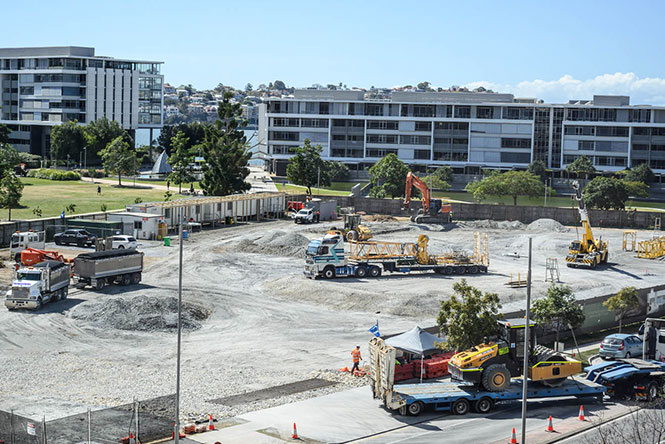
If you are an executive of a construction company or construction contractor, this regulatory advice provides guidance on managing the risks and hazards of heavy vehicle transport activities in the construction industry, including:
- engaging with heavy vehicles
- consigning or receiving materials in a heavy vehicle
- managing premises where heavy vehicles are loaded or unloaded
- other parties in the Chain of Responsibility (CoR).
What are my legal obligations?
This is an obligation to eliminate or minimise public risks, and a prohibition against directly or indirectly causing or encouraging a driver or another person, including a party in the CoR, to contravene the HVNL. CoR parties, and their executives, should be aware that they remain a CoR party even when their transport activities are contracted, or subcontracted, to another party.
Note: Transport activities includes all activities and business processes associated with the use of a heavy vehicle on a road.
What are the legal consequences?
Under the HVNL, if you are a party in the CoR or an executive, you have a legal obligation to eliminate or minimise public risk. If a breach is proven, the law provides sanctions against a company and its executives, ranging from education and improvement notices to prosecution.
Sanctions include:
- formal warnings
- enforceable undertakings
- infringement notices
- improvement notices
- prohibition notices
- injunctions
- prosecution.
Why is this an issue for the construction industry?
A pattern of non-compliance
Based on reports from compliance officers and the 2021 National Roadworthiness Survey, heavy vehicles commonly used by the construction industry have an observed pattern of non-compliance. The survey identified mechanical safety as an issue for heavy rigid truck and trailer combinations, a vehicle type used extensively in construction projects. Despite ongoing regulatory oversight, the issue persists.
Increasing construction projects
Economic recovery initiatives by State and Federal Government agencies in response to COVID-19 are expected to cause a significant increase in infrastructure and construction projects. This means an associated increase in heavy vehicle use. Increased heavy vehicle traffic will, in turn, cause an increase in interaction between heavy vehicles and light vehicles and pedestrians, especially in congested urban areas. The increase in heavy vehicle traffic elevates the risk of crashes and pedestrian (strikes) deaths and injuries.
NHVR compliance activities
Our compliance activities will focus on construction industry CoR parties and their executives who have a significant and cascading influence over the safety of heavy vehicles in their industry, even when those activities are being performed by other CoR parties.
What are the hazards and risks?
Heavy vehicle hazards in the construction industry may include:
- the mechanical safety of vehicles, especially heavy rigid truck and trailer combinations
- loads not being properly restrained
- vehicles exceeding mass and/or dimension limits.
Related hazards may include:
- driver fatigue
- workers impaired by alcohol and/or other drugs
- vehicles complying with access requirements
- timeslot allocation/queuing
- prohibited requests/contracts.
The potential safety risks resulting from these hazards may include:
- serious injury or death to workers, road users and the public
- damage to road and other infrastructure.
Why is it important to manage these hazards and risks?
By appropriately managing these risks and hazards as an executive of a party in the CoR, you help to:
- prevent injury and fatalities to employees and members of the public
- avoid financial losses due to delays, impacts on scheduling, closure of work sites, and damage to equipment and/or infrastructure
- avoid regulatory and other legal sanctions
- enhance your business’s reputation and position it as a business or employer of choice
- create a safety culture within your business where workers are encouraged to make informed decisions about safety.
How do I manage the hazards and risks?
Best practice is to take a proactive approach at preventing these risks. At a minimum, you should undertake a risk assessment to identify the risks and consider what controls are required to prevent those risks.
Control measures may include:
- ensuring that commercial contracts do not create incentives for people to breach the HVNL
- only dealing with reputable parties who can demonstrate a strong compliance and safety culture
- requesting relevant safety certification and accreditations before entering into a commercial arrangement with a transport operator you haven’t previously engaged, or whose safety reputation is unknown
- implementing policies and procedures regarding the prevention of safety risks and strongly communicating these standards to employees and other parties.
Control measures for related hazards may include:
Mechanical safety
- viewing operator’s maintenance regime/records
- requesting that the operator provide details of their compliance history
- giving preference to operators who hold relevant safety accreditations such as the National Heavy Vehicle Accreditation Scheme (NHVAS)
- considering the age of an operator’s fleet and the impacts this may have on the mechanical safety of the fleet (noting that vehicles exceeding 12 years old were identified in the National Roadworthiness Survey as more likely to be defective).
Load restraint, mass and dimension limits
- installing relevant equipment and infrastructure on construction sites to assist operators with properly restraining, weighing and measuring loads on heavy vehicles
- ensuring that both on-site loaders and excavators and operator vehicles are fitted with relevant weighing systems
- using other methods for ascertaining load mass (for example, test weighs, calculation by use of known mass of loads (equipment, concrete, common steel products).
Fatigue
- ensuring that project milestones, scheduling and site operating hours do not contribute to operators breaching fatigue requirements
- ensuring that operators have a holistic understanding of the causes and impacts of fatigue.
- ensuing operators adhere to relevant work/rest record keeping requirements
Alcohol and drugs
- ensuring that contractual provisions clearly communicate fit for work requirements
- ensuring contactors have effective drug and alcohol management policies
- ensuring that contracts can be terminated if the minimum safety requirements are not complied with.
Access
- identifying load destinations and providing that information to other relevant parties
- identifying compliant routes and assisting other parties in route planning
- providing accurate information about loads to other parties.
Timeslot allocation/queuing
- ensuring that contracts allow for time to absorb delays (do not penalise drivers for being late for a booking time)
- ensuring that contracts have flexibility in booking times to cater for variations in a driver’s expected arrival time
- scheduling timeslots where possible to minimise congestion
- including space for vehicle queuing and adopting appropriate traffic plans, including the use of traffic controllers to manage vehicles, when designing or configuring sites/premises.
Prohibited requests/contracts
- ensuring that contracts do not contain incentives that may encourage a driver to speed or drive whilst fatigued, or encourage other parties to do something that would result in a driver doing so
- including escalation processes for when parties in the contract act contrary to agreed terms and conditions of the contract
- allowing sufficient time to safely complete freight tasks.
Learn more about managing heavy vehicle safety and how to manage risks by exploring more of our Regulatory Advice topics.
THIS DOCUMENT IS UNCONTROLLED IN HARD COPY FORMAT
