
 Road managers
 Accessibility tools


Safety Bulletin - Increase in trailer drop and decoupling events
Safety Bulletin - Increase in trailer drop and decoupling events
National
Heavy
Vehicle
Regulator
Subject
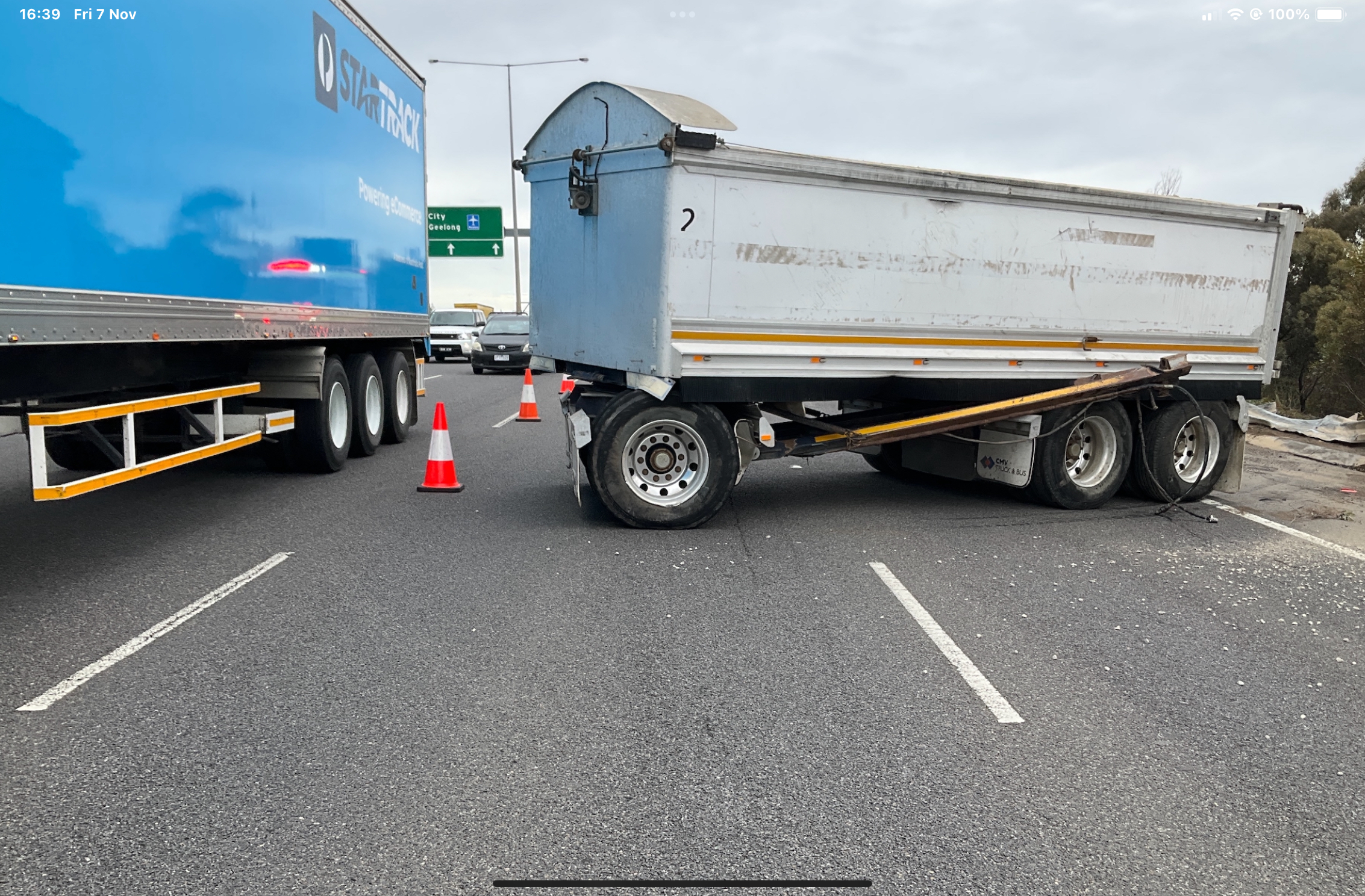
The National Heavy Vehicle Regulator (NHVR) is issuing this Safety Bulletin in response to a recent increase in incidents involving unplanned trailer drop and decoupling events that have resulted in heavy vehicle crashes. Intelligence collection and media scanning indicates a clear rise in decoupling events when compared with previous reporting periods.
This bulletin outlines key preventative measures that heavy vehicle operators and drivers should take to reduce the risk of these incidents and support the safe movement of goods on our roads.
Issue
Recent intelligence shows an increase in trailer drop and decoupling events leading to heavy vehicle crashes. Key contributing factors include:
- Mechanical wear or failure: Worn, damaged, or out‑of‑adjustment coupling components can reduce coupling integrity and may fail under load.
- Operator error or distraction: Inadequate training or failure to follow safe, standardised coupling procedures can compromise coupling integrity.
- Dynamic forces on combinations: Normal vertical, longitudinal, and lateral forces can stress coupling components, particularly where maintenance or fitment is insufficient.
- Improper loading: Poor load stability or weight distribution can increase coupling stress and the likelihood of detachment.
These factors significantly increase safety risks, particularly on high‑speed roads where a trailer loss can have severe consequences for both the driver and other road users.
Action Required
Effective control of coupling related risks begins with strong operator systems and oversight. The following requirements outline essential actions operators must take to ensure coupling equipment is suitable, well maintained and consistently inspected.
Operators should:
- Engage with coupling manufacturers and technical experts during procurement to ensure the coupling type and specification are suitable for the intended vehicle and freight task.
- Ensure regular maintenance and inspections of couplings are carried out by appropriately skilled and qualified personnel, in line with manufacturer recommendations and applicable standards.
- Provide drivers and maintenance staff with appropriate training so they can confidently identify, inspect, and report coupling wear, damage, or defects.
- Implement a clear and accountable inspection reporting system that records findings, assigns corrective actions, and ensures responsibilities are well understood across the organisation.
- Investigate all decoupling incidents and near misses, ensuring findings are documented and used to improve systems, maintenance practices, and driver training.
Drivers play a critical role in preventing decoupling incidents and must be trained in the safe system of work. Pre‑start checks must be completed before every journey, as failure to conduct them thoroughly can create serious safety risks.
Drivers should:
- Undertake a thorough visual inspection of couplings—including drawbars and towbars – removing any covers or protective plates to check for wear, damage, or defects, and report any issues before moving the combination.
- Ensure coupling components are clean and free from dirt or debris that may prevent proper engagement of couplings or locking mechanisms.
- Ensure all air lines, electrical cables, and safety chains are correctly secured and operational before departure.
- Conduct a walk‑around of the combination and complete a final visual check.
- Perform a tug test prior to departure.
