
 Road managers
 Accessibility tools


Loading Guide - Load-Rated Side Curtains
Loading Guide - Load-Rated Side Curtains
National
Heavy
Vehicle
Regulator
This guide is part of a series of loading guides that provide tips and tricks to help you understand good load restraint. More detailed information on the principles covered by this guide can be found in the Load Restraint Guide 2025.
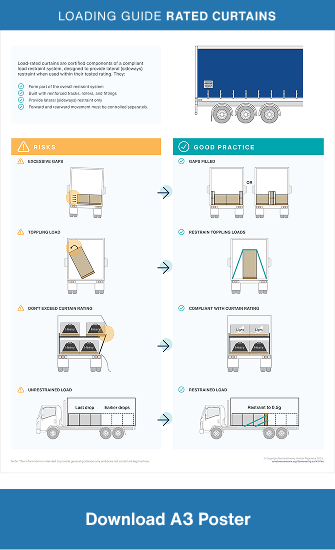
What are load-rated side curtains?
Load-rated side curtains are components that can be used in a certified load restraint system (CLRS) designed to provide lateral (sideways) restraint when used within their approved load-rating. Load-rated curtains:
- form part of an overall restraint system, typically alongside rated headboards and tailboards
- are designed with reinforced tracks, rollers, and fittings to enable reliable performance within their rated capacity
- provide sideways restraint only, forward and rearward restraint must be controlled separately for the load to be considered fully restrained.
Identifying load-rated side curtain
A load-rated side curtain will have a label or sticker showing its certified rating, including pallet capacity, load type, and any specific conditions.
Manufacturers may also provide a certificate that provides additional detail about the rating, however it’s not mandatory to carry a copy in the vehicle. Always check the label, never assume a curtain is rated.

Understanding Curtain Rating
For many loads and operating conditions, load-rated side curtains form part of an effective restraint solution. However, their function and limitations are not always well understood.
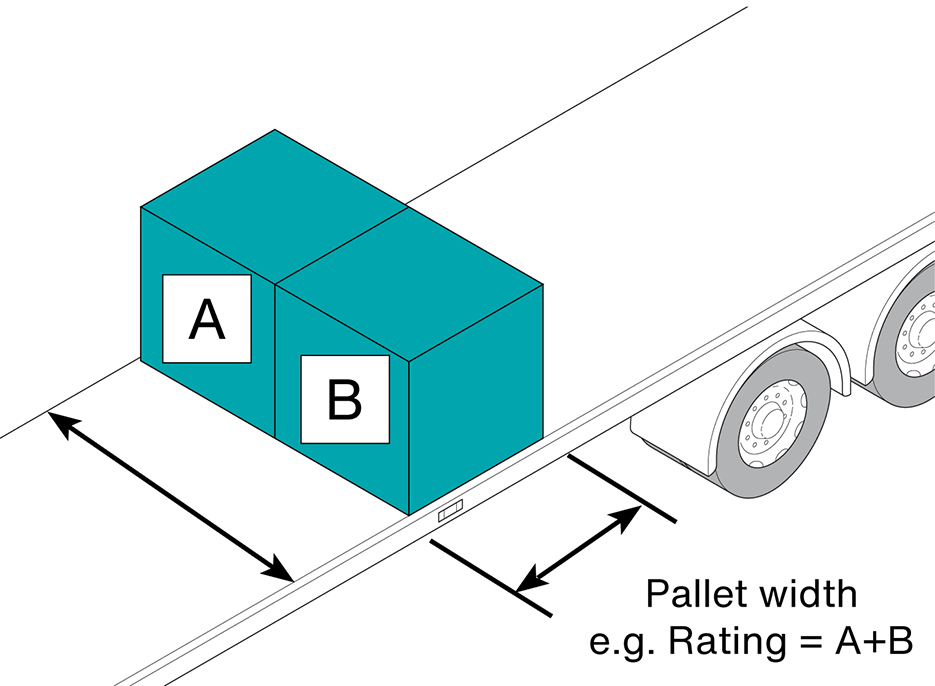
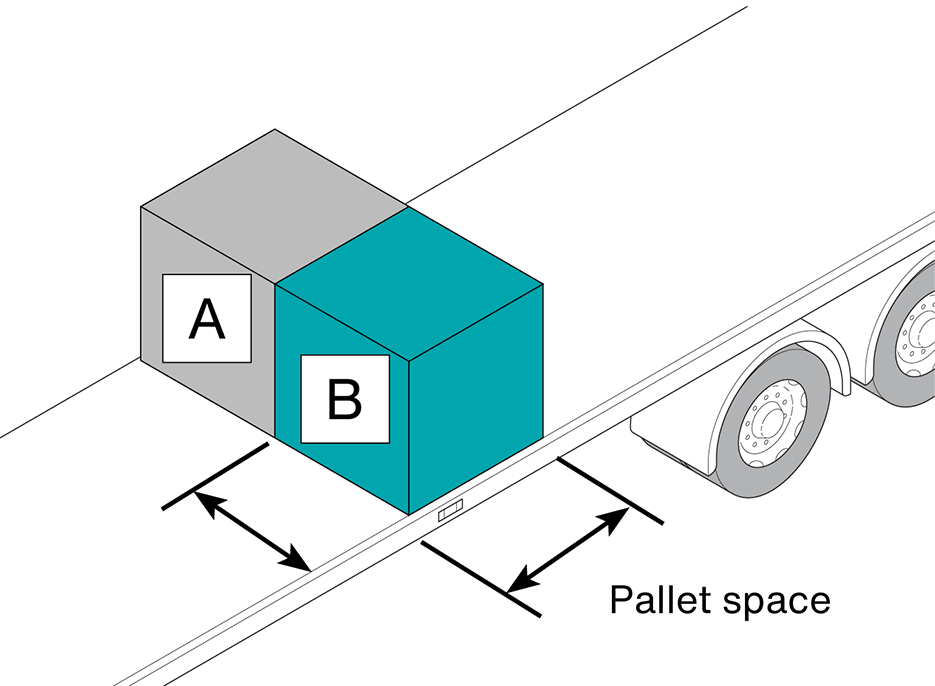
Curtain ratings are typically specified in one of the following ways:
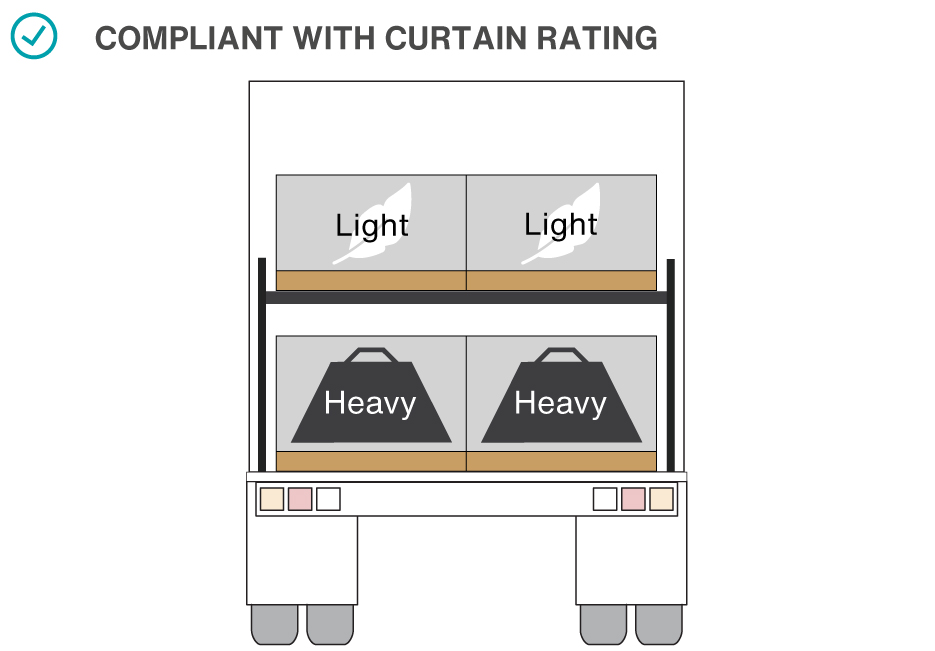
- allowable weight per pallet width (The combined mass of pallet A and pallet B must not exceed the stated rating.) See figure 384
- allowable weight per pallet space (Each individual pallet A or B, must not exceed the stated rating.) See figure 383
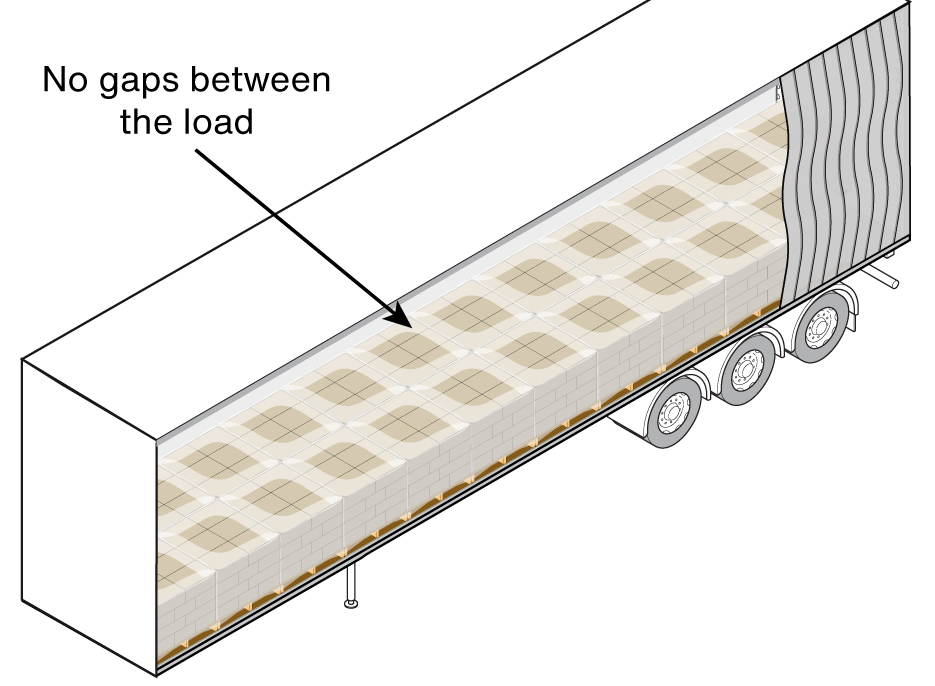
- total allowable payload (Evenly distributed pallets across the entire deck space must not exceed the total rating.) See figure 385
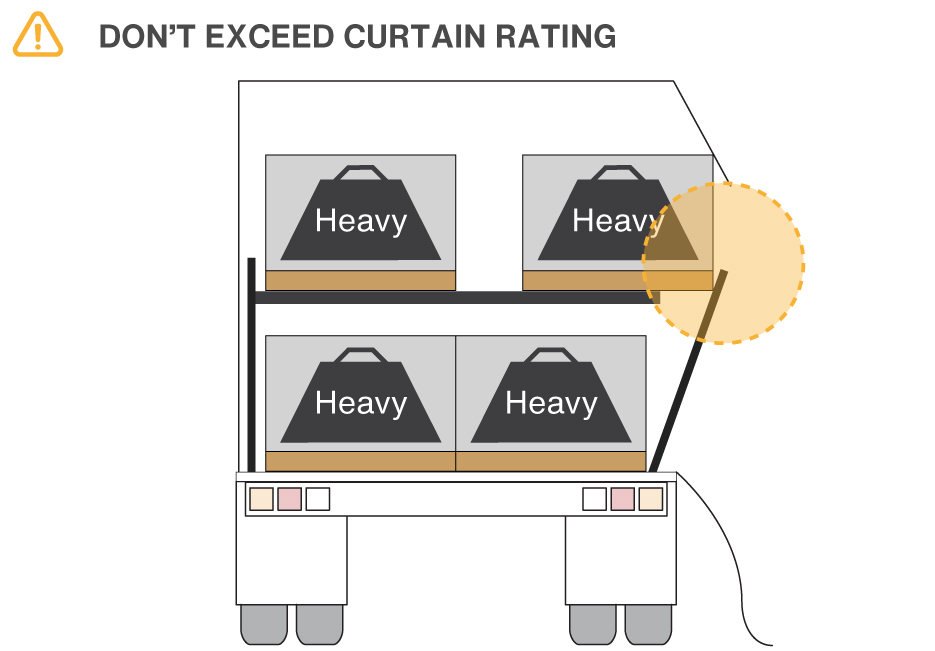
When the mass of the load exceeds the curtain rating, additional lashings will be required to restrain the load.
Tips
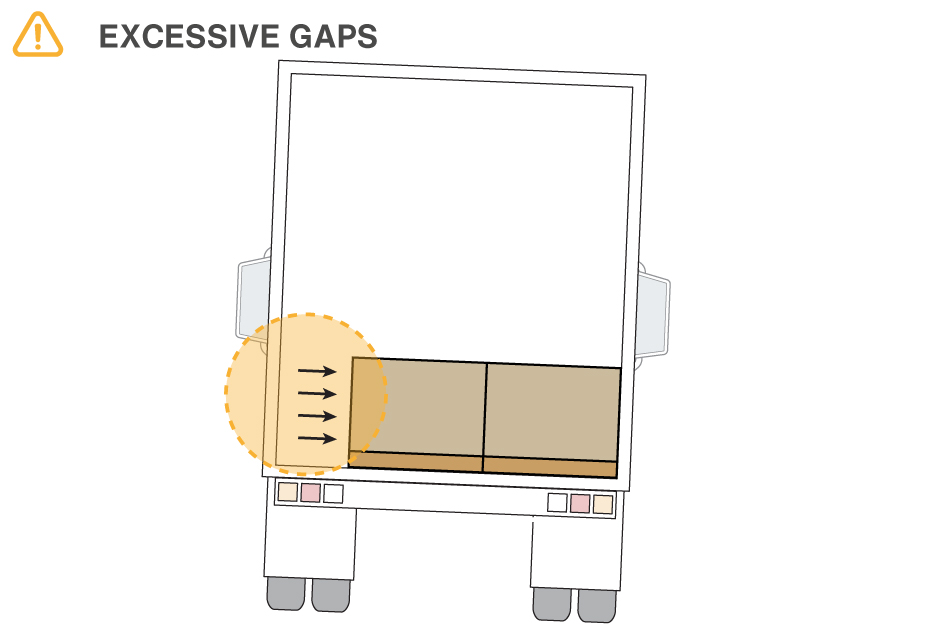
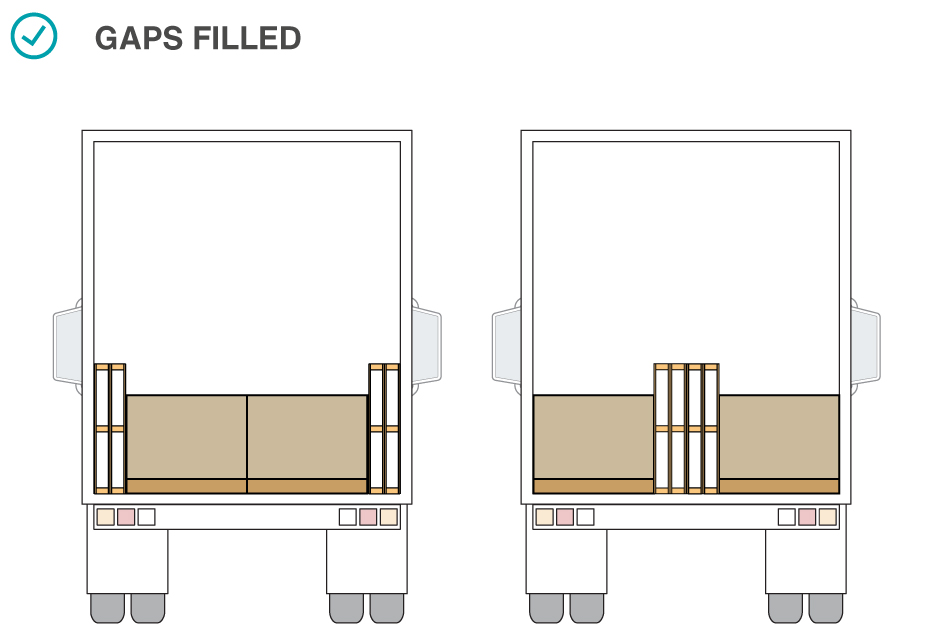
Leave as few gaps as possible between loads across the width of the trailer. Rated curtains are not designed to restrain loads that may impact the curtain when vehicle forces cause it to slide/move. Fill gaps with pallets, dunnage or airbags (where appropriate). If gaps can't be filled, use extra restraints like gates or lashings to stay safe and compliant.
Risks
Good practice
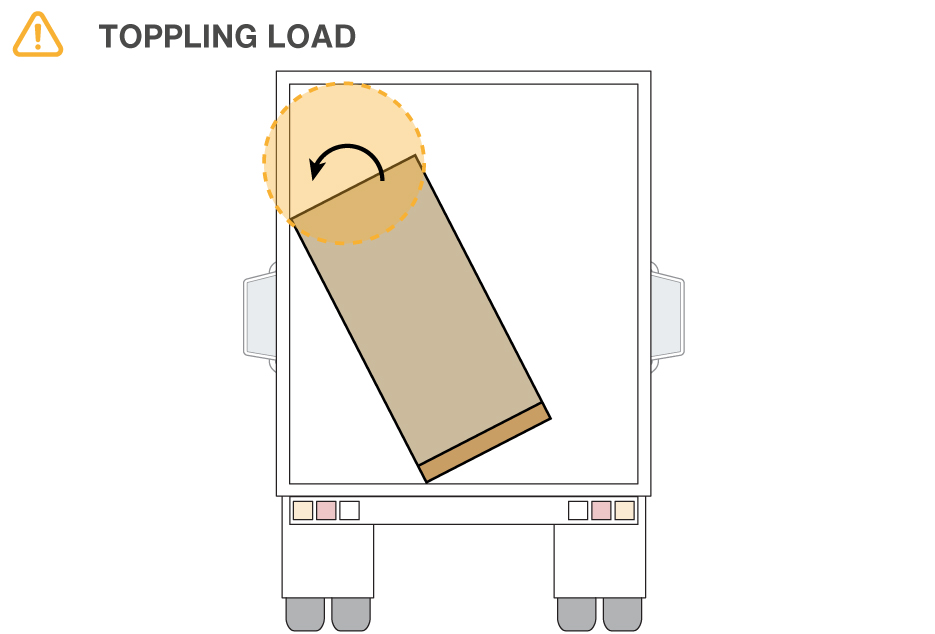
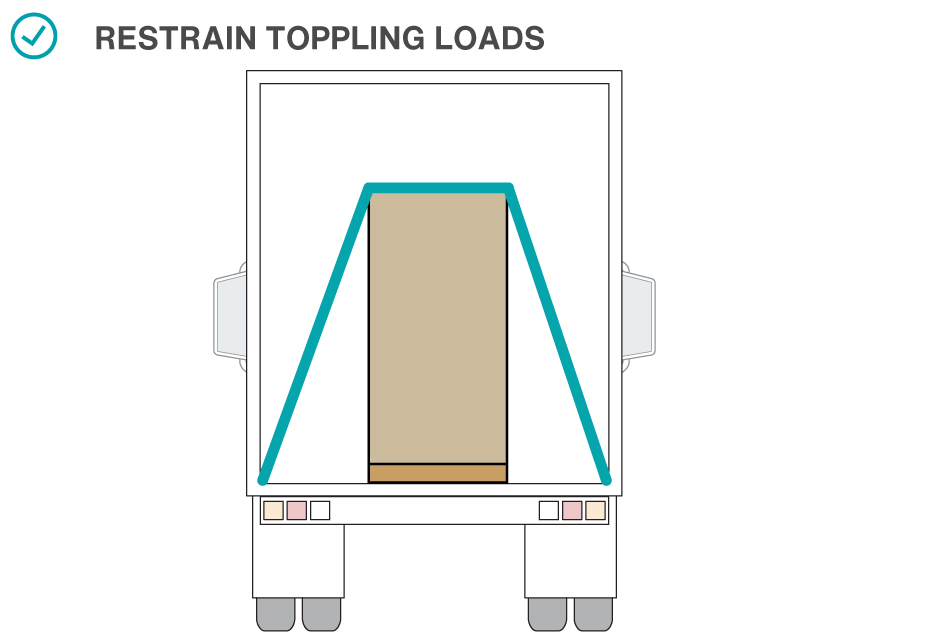
Tall loads can topple if not properly restrained, especially during cornering or sudden stops. If they fall against the curtain, they can damage it or the impact of the load hitting the curtain may exceed its rating. It’s good practice to restrain tall items with lashings, gates or blocking to keep them stable and protect the curtain.
Risks
Good practice
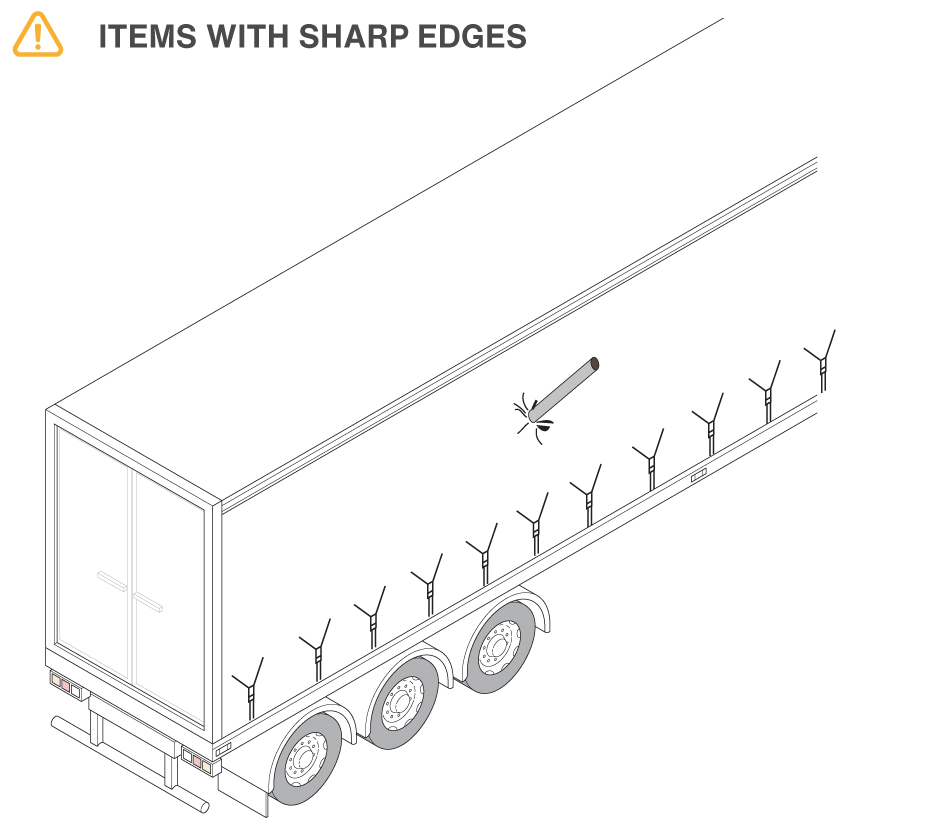
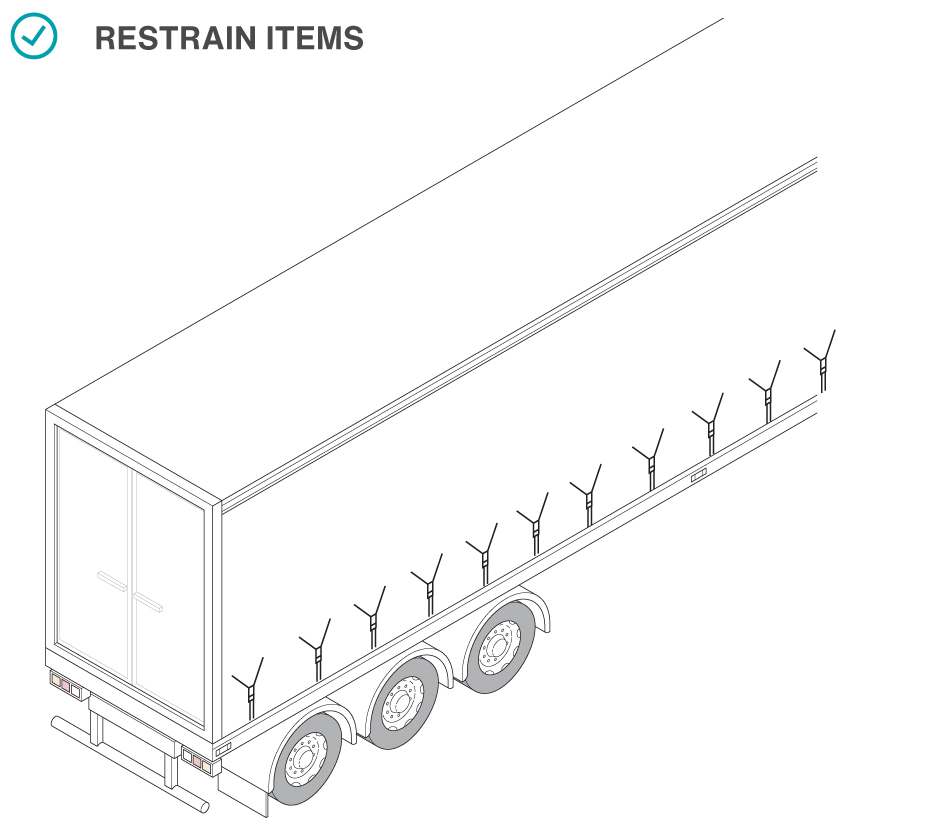
Sharp edges or protrusions on loads will damage or pierce curtains. Ensure sharp items are restrained appropriately.
Risks
Good practice
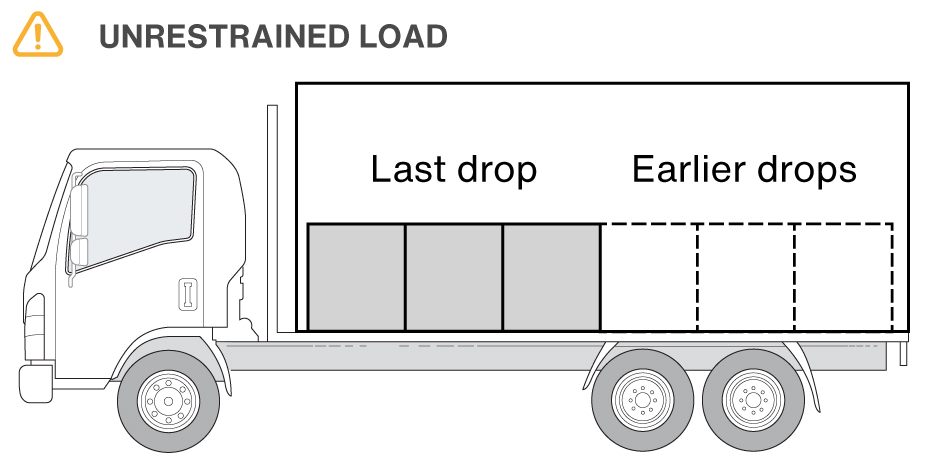
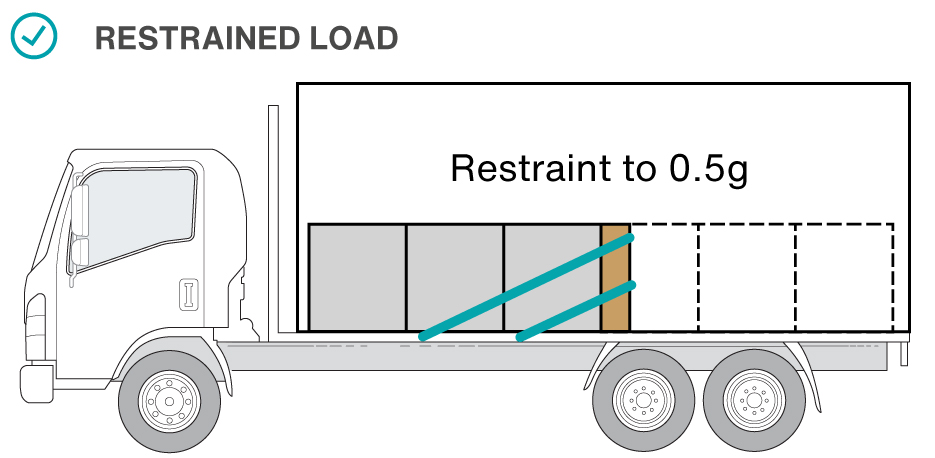
When making multiple drops, gaps can form at the front, middle or rear of the load. These must be blocked to prevent movement. Unrestrained items can shift and damage load-rated side curtains or pose a safety risk. Always secure the rear of the load.
Risks
Good practice
Curtain-rated vehicles must not carry loads that are not suitable to be restrained by curtains or exceed the certified approved load rating capacity of the curtain system. Regardless of how the load is placed, the total force exerted by the load must remain within the curtain’s rating capacity. This ensures the curtain can perform as intended under all conditions.
Risks
Good practice
Maintenance
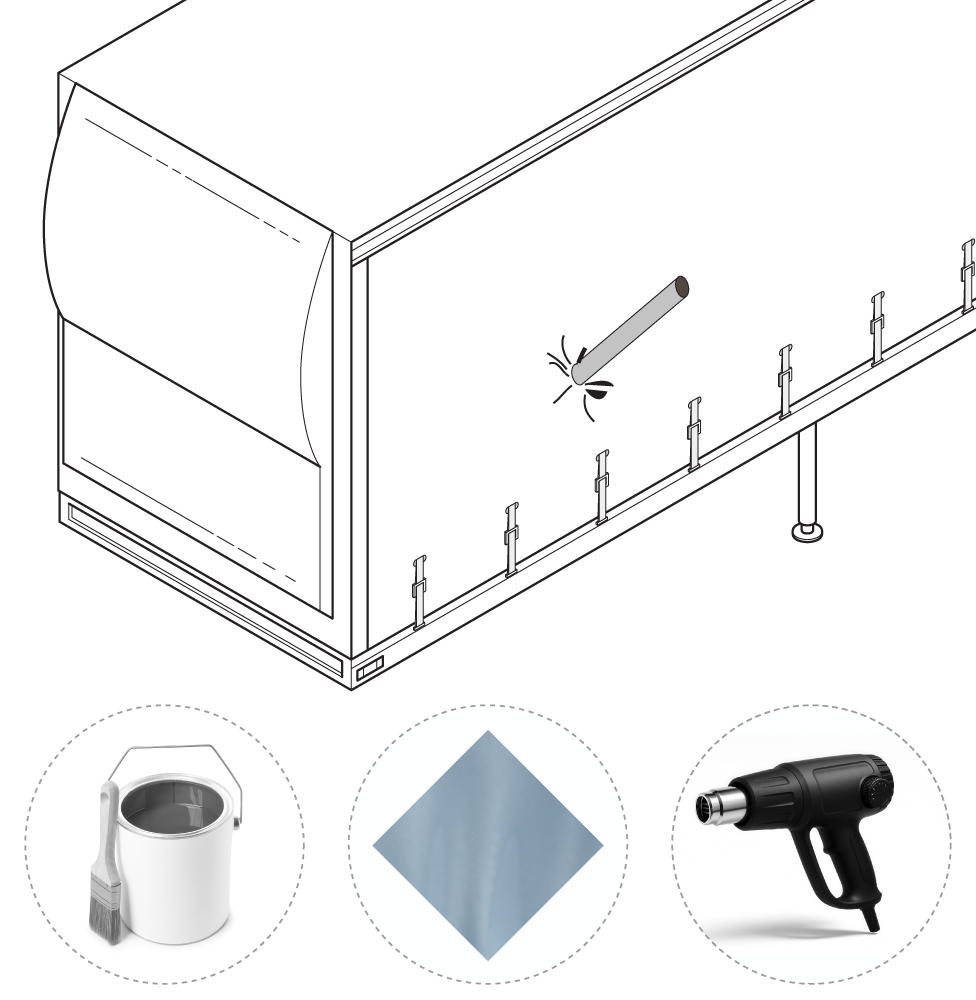
Repairs to load-rated side curtains should be carried out by qualified technicians using approved methods such as:
- Hot air gun welding
- Pulsed RF or hot wedge welding
- Manufacturer-approved stitching.
DIY repairs are strongly discouraged, as incorrect techniques can compromise the curtain’s rated performance.
Certification
While certification or re-certification following repairs is not legally required, significant repairs should prompt consultation with the manufacturer or a qualified engineer to ensure the curtain remains fit for purpose and compliant with its rated capacity.
Case studies – Load Restraint Guide
The Load Restraint Guide 2025 has 12 case studies, with case studies 8-12 dedicated to load-rated side curtains.
These are:
- Case Study 8: Partially blocked load with rated curtains
- Case Study 9: Unblocked load with rated curtains
- Case Study 10: Fully blocked load with rated curtains
- Case Study 11: Rated curtains with a mezzanine deck
- Case Study 12: Multi-drop load with rated curtains
Note: If you are unsure how to use a rated curtain, seek advice from an appropriately qualified engineer. For more detailed information on loading and load restraint, you can refer to the NHVR’s Load Restraint Guide.
