
 Road managers
 Accessibility tools


Regulatory Advice – Managing the safety risks of light to medium heavy vehicles
Regulatory Advice – Managing the safety risks of light to medium heavy vehicles
National
Heavy
Vehicle
Regulator
Note: This information is intended to provide general guidance only and does not constitute legal advice. We encourage you to obtain independent advice about your legal obligations. If you have any feedback on the information provided please contact us at info@nhvr.gov.au
This regulatory advice is about identifying and managing the safety risks and legal obligations for the use of light to medium heavy vehicles under the Heavy Vehicle National Law (HVNL).
Who is this advice for?
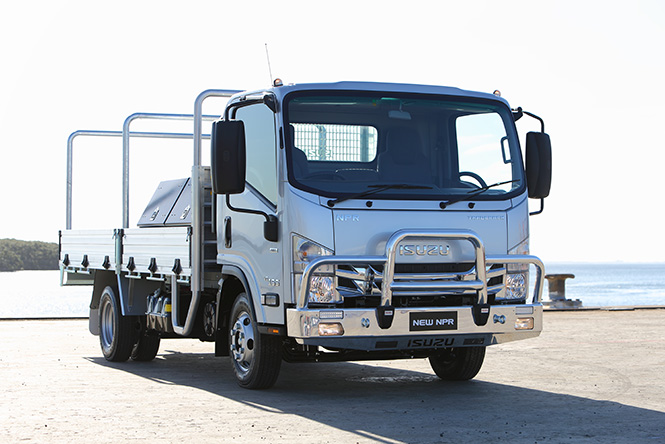
If you own or manage a business that is not primarily heavy vehicle transport focused, but you use a heavy vehicle to transport people, building material, tools, small plant or construction equipment to and from work sites, this advice may apply to you.
For example, this regulatory advice may apply to:
- builders
- concreters
- landscapers
- plumbers
- small plant operators
- other tradespeople who drive a large work vehicle (a light to medium heavy vehicle)
- other parties in the Chain of Responsibility (CoR parties and their executives).
What is a light to medium heavy vehicle?
A light to medium heavy vehicle has a gross vehicle mass (GVM) or aggregate trailer mass (ATM) of more than 4.5t and less than 12t. The GVM is the maximum mass the vehicle can operate at, as specified by the registration authority or manufacturer.
What are my legal obligations?
Some businesses, such as builders, concreters or other trades, may not recognise that they are heavy vehicle operators and may be subject to CoR obligations under the Heavy Vehicle National Law (HVNL).
Primary Duty
This is an obligation to eliminate or minimise public risks, and a prohibition against directly or indirectly causing or encouraging a driver or another person, including a party in the CoR, to contravene the HVNL. CoR parties and their executives, should be aware that they remain a CoR party even when their transport activities are contracted, or subcontracted, to another party.
This means that each CoR party shares responsibility and has the same duty. It is not a matter of determining which party is responsible for each part or each transport activity; rather all parties share the responsibility.
What are the hazards and risks?
To identify and understand the hazards and risks linked to the use of heavy vehicles, businesses should conduct a risk assessment to consider the transport tasks being conducted, the type of loads a vehicle carries, the environment a vehicle operates in, and the skill level required for workers to safely operate the vehicle and perform the task assigned to them.
Hazards and risks may include (but are not limited to):
Vehicle collisions
Crashes involving heavy vehicles may result in serious outcomes. Causes of a crash may include:
- a heavy vehicle exceeding mass or dimension requirements
- shifting loads while the heavy vehicle is in transit
- an unskilled driver, or driver untrained in the task they need to perform
- an unroadworthy heavy vehicle
- driver distraction
- excessive or inappropriate speed
- a driver impaired by fatigue, alcohol or other drugs.
Loads shifting or falling off the vehicle
Causes of a load shifting or falling off a vehicle may include a driver not having access to a loading plan, lacking the skill or training to safely load a vehicle, or the lack of suitable load restraint equipment. The Load Restraint Guide 2025 provides guidance and practical advice on how to meet loading requirements and loading performance standards.
The performance standards are legal obligations in Schedule 7 of the Heavy Vehicle (Mass, Dimension and Loading) National Regulation.
Inadequate experience and skill
A risk assessment should include an assessment of the knowledge, skills and experience workers are required to perform for each task. A training needs analysis will help identify a worker’s current skill level and what additional skills they may require to safely carry out work tasks.
Note: In this context, a training needs analysis is a review of learning and development needs within a business. It considers the knowledge, skill, and behaviours that people need and how to develop them effectively.
Training must be provided for anyone who:
- is new to the heavy vehicle industry
- is not licenced to operate a heavy vehicle
- uses specialised equipment (vehicle-mounted cranes and other ancillary equipment)
- is transporting machinery, equipment or tools (loading and load restraint)
- lacks basic driver safety skills
- lacks an understanding of the requirements in the HVNL.
Mechanical Safety
Vehicles must be maintained to comply with Heavy Vehicle (Vehicle Standards) National Regulation and Australian Design Rules. The NHVR has developed the National Heavy Vehicle Inspection Manual (NHVIM) to provide businesses in the heavy vehicle industry with consistent criteria for carrying out vehicle inspections.
The manual enables a consistent standard for identifying when a heavy vehicle is unsafe and clear guidance on the pass/fail criteria for heavy vehicle components.
The Guide to creating heavy vehicle daily checks (PDF, 375KB) is a useful tool that assists operators and drivers to identify basic safety issues on a heavy vehicle before using it on a road.
Driver distraction
Distracted driving is a major cause of vehicle crashes. This is when a driver’s attention is not fully focused on the road and the safe operation of their heavy vehicle.
Driver distraction includes:
- texting while driving (this is one of the biggest contributors to distracted driving and heavy vehicle incidents)
- talking on a mobile phone while driving (even with a hands-free device)
- talking to a passenger
- driving while emotionally distressed or daydreaming
- taking one or both hands off the wheel to eat or drink while driving
- reading driving directions, scrolling radio stations, or looking at something on the side of the road.
Driver fatigue
Causes of fatigue include unsafe or unreasonable scheduling of rosters, medical conditions, interrupted sleep patterns, poor diet or lifestyle choices. In most cases, a light to medium heavy vehicle driver is not subject to HVNL work and rest hour requirements. However, all parties in the CoR must manage the risk of their transport activities, including heavy vehicle drivers that may be impaired by fatigue.
More information can be found in Regulatory Advice - Fitness to drive: Fatigue.
Health, alcohol or other drug impairment
Impairment from alcohol and other drugs (including prescribed and over-the-counter medication) can adversely affect a person’s ability to work safely and can present serious safety risks to individuals, work colleagues and the public.
A workers’ fitness for duty is fundamental to safety and is a critical factor in a business ensuring the safety of its transport activities. In turn, effective management of alcohol and other drugs (AOD) should be a foundation of any fitness for duty program.
More information can be found in Regulatory Advice - Managing the risks of employees impaired by alcohol and other drugs.
Speed
Speeding is a hazardous behaviour that greatly increases the likelihood of crashes. Speeding is not just driving faster than the posted legal limit. Inappropriate speed can include driving too fast for the weather and visibility conditions, traffic and road conditions. Other factors that determine appropriate speed are the vehicle condition and handling dynamics, the load being carried, and driver skill and experience.
More information can be found in Regulatory Advice - Prohibited requests and contracts under the HVNL.
Why is it important to manage hazards and risks?
Taking positive steps to manage the hazards and risks of light to medium heavy vehicles will keep workers, road users and the public safe and help parties in the CoR to meet the Primary Duty and other legal obligations..
Who has a duty to manage hazards and risks?
All parties in the CoR have a Primary Duty to ensure safety so far as is reasonably practicable. If a business engages in operating, driving, loading or unloading a heavy vehicle, the business holds a duty under the HVNL to ensure the safety of its transport activities.
Businesses should, at a minimum, conduct a risk assessment to consider the transport tasks being conducted, the type of loads a vehicle carries, the environment a vehicle operates in and the skill level required for workers to safely operate the vehicle and perform tasks assigned to them.
How can I manage the hazards and risks?
Key measures to manage the hazards and risks associated with the transport activities of light to medium heavy vehicles include:
- ensuring vehicles are safe, roadworthy, and properly maintained
- ensuring the vehicle is fit for purpose
- placing loads correctly to maintain vehicle stability and safety
- securing loads to prevent them falling or being dislodged from the vehicle
- using an appropriate method to restrain the vehicle load
- having systems and processes in place to manage driver fatigue and alcohol and drug use in the workplace.
What are on-road regulatory activities for heavy vehicles?
NHVR, along with state road authority officers and police, monitor and enforce the HVNL, road rules and other state-based laws. If directed by an authorised officer, the driver of a heavy vehicle must stop their vehicle. This direction may occur in the course of a mobile intercept, a static intercept at a random roadside inspection site or at a roadside heavy vehicle checking station.
Authorised officers conduct random and targeted inspections of heavy vehicles to minimise the potential for any harm by identifying safety risks linked to:
- the load and the restraint of loads on heavy vehicles
- the vehicle’s roadworthiness and compliance with the relevant vehicle standards
- the driver's fatigue level or impairment by alcohol and other drugs
- verifying the licence status of the driver and the vehicle's registration status.
Authorised officers use tools to monitor and interpret data and information obtained on heavy vehicles.
For more information, visit On-road compliance and enforcement.
THIS DOCUMENT IS UNCONTROLLED IN HARD COPY FORMAT.
